How I Captured the Surge in New-Energy Vehicle Stocks?
2020-12-07 18:00:45
On October 13th, two message feeds from the Datayes! Smart Monitor caught my attention.
 |
 |
 |
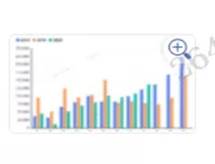 |
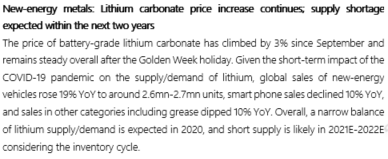
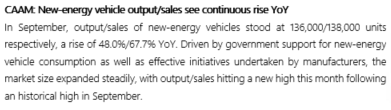
One feed said the price of lithium carbonate was continuing to rise, and the other emphasized robust shipments and sales of new-energy vehicles. It seemed to be painting me a picture of stock price rallies! What would happen if investors had been able to receive these real-time messages delivered by the Smart Monitor and take immediate action?
October 14th witnessed a sweeping rally of the NASDAQ new-energy vehicle sector, amongst which NIO, XPEV, LI, TSLA rose 22.57%, 12.27%, 6.95%, 3.28%, respectively, bringing about an across-the-board share price jump of the A-share counterpart on October 15th.
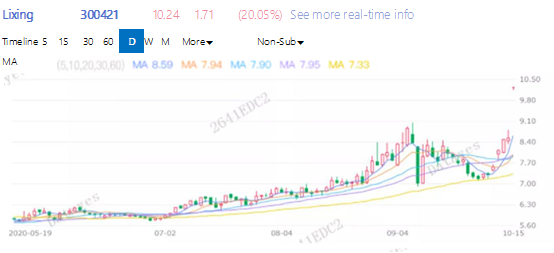
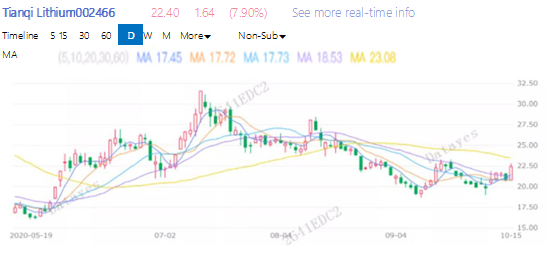
Bent on collecting and sorting data/statistics every day, investors are eager to promptly detect any investment opportunities.
However, the reality is that they are always overstretched by the gigantic size of the fundamental data and its variable nature as the big data era approaches. Specifically, any change of a company’s important core data can impact its profitability and valuation at any time, thus posing a big challenge to investors on how to capture a company’s future performance changes in real-time.
This is the moment when machines can come to the rescue with their unique advantage. Machines never tire and can monitor information and data across the market; by sifting out the essentials from scattered and miscellaneous big data, they can proactively alert us with information on material changes.
With the help of machine learning models, machines are also capable of conducting real-time monitoring on the financial results of listed companies based on fundamental research logic and high-frequency market and alternative data.
Datayes! is precisely this kind of robotic assistant whose smart monitoring functionality and AI-enabled recommendations perfectly serve investors’ demands.
If we could obtain timely alert on material changes to fundamental valuation ahead of the market, then it’s possible for us to realize potential excess earnings.